A sudden plumbing problem can quickly affect your comfort, safety and property. Water may spread through flooring and ceilings, a blocked toilet can create a hygiene risk, and a boiler or gas fault may leave your home without essential heating and hot water.
However, not every dripping tap requires an emergency call-out. Understanding the difference between a minor issue and a serious plumbing emergency can help you act quickly when it matters and deal with smaller faults safely.
This guide explains five signs you may need an emergency plumber in London, followed by three minor plumbing problems that homeowners and tenants can often manage themselves.
If you are unsure, professional advice is the safest option. Phoenix Heating Plumbing & Renewables provides 24/7 emergency call-outs, with no call-out charges, fast local response times and experienced engineers serving Hammersmith, Fulham and South West London.
What counts as a plumbing emergency?
A plumbing problem is generally urgent if it could:
- Cause serious or ongoing water damage
- Create a health or sanitation risk
- Affect gas or carbon monoxide safety
- Leave the property without essential water, heating or hot water
- Develop into a much more expensive repair if ignored
Landlords, tenants, homeowners, families, businesses and property managers may all face these problems. Taking sensible first steps can help limit the damage while qualified help is arranged.
5 signs you need an emergency plumber in London
1. A burst pipe or uncontrollable leak is causing flooding

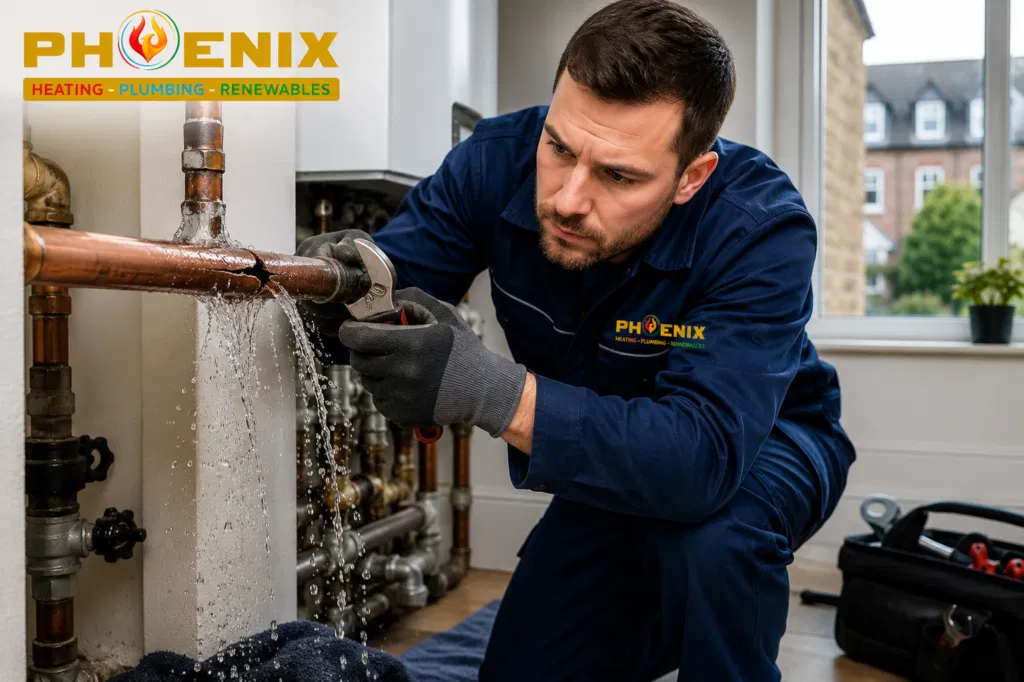
A burst pipe can release a large amount of water in a very short time. You may notice water pouring from pipework, spreading across a floor, coming through a ceiling or appearing behind a wall.
Even a smaller leak can become serious if it is close to electrical sockets, appliances, flooring or plasterboard. If not addressed quickly, it may lead to damaged walls, ruined flooring, mould growth, staining and expensive restoration work.
If it is safe to do so:
- Turn off the main stopcock, usually found under the kitchen sink, near the front door or in a utility area.
- Open cold taps to help drain water from the system.
- Keep water away from sockets and electrical equipment.
- Move furniture, electronics and valuables away from the affected area.
- Do not force a stuck stopcock.
If the leak cannot be controlled or you cannot find the stopcock, contact an emergency plumbing service immediately. Prompt Burst Pipe Repair Service can help protect your property and reduce further damage.
2. Sewage is backing up or a toilet will not stop overflowing
Dirty water backing up through a toilet, shower, sink or floor drain is an urgent sanitation problem. It may indicate a serious blockage in the main drainage system rather than a local problem affecting one fixture.
Warning signs include:
- Raw sewage returning through drains
- An overflowing toilet that continues to fill
- Several fixtures blocked at the same time
- Strong, persistent foul smells
- Gurgling sounds from toilets or drains
Stop flushing and keep children and pets away from the affected area. If there is an accessible isolation valve behind the toilet, you may be able to turn off the water supply. Avoid using other sinks, toilets or showers until the cause has been assessed.
A professional blocked drain and drain clearance service can determine whether the issue is a local blockage, damaged pipework or a larger drainage fault. Acting quickly may help prevent sewage from entering floors, walls and living areas.
3. You smell gas or suspect a dangerous boiler fault
A smell of gas should always be treated seriously. Gas is often described as having a sulphur or rotten-egg smell. Hissing sounds near a gas appliance, meter or pipework may also indicate a leak.
Other warning signs may include:
- A boiler making unusual banging, whistling or gurgling noises
- A boiler repeatedly shutting down
- A yellow or unusual flame instead of a steady blue flame
- A boiler leaking water
- Symptoms such as dizziness, headaches or nausea
- A carbon monoxide alarm activating
If you suspect a gas leak or carbon monoxide, leave the property immediately. Do not use electrical switches, naked flames or anything that could create a spark. From a safe location, contact the National Gas Emergency Service on 0800 111 999.
Gas pipework, boiler internals and flues should never be repaired as a DIY task. Once the immediate gas emergency has been dealt with, arrange help from Gas Safe registered engineers. Phoenix Heating Plumbing & Renewables provides professional emergency gas leak repair and boiler support for homes and businesses.
4. Your property has completely lost its water supply
A total loss of water can make a property difficult or impossible to use. Toilets may not refill, taps may stop running and occupants may be unable to wash, cook or carry out basic daily tasks.
First check whether the issue affects the wider area. Your water supplier may be carrying out emergency works or dealing with a local supply fault. If neighbouring properties still have water and your property does not, the problem may involve your internal pipework, stopcock or supply system.
A sudden loss of water may be connected to:
- A burst or damaged supply pipe
- A faulty internal valve
- Frozen or damaged pipework
- A serious plumbing system failure
- Work taking place within the property
If the loss of supply is isolated to your property, professional diagnosis is important. A plumber can identify the cause and help restore reliable water service without unnecessary disruption.
Tenants should notify their landlord or managing agent as soon as possible, while taking reasonable steps to protect the property from any associated leak or damage.
5. Several drains are blocked or backing up together
One slow sink may be a minor blockage. Several blocked fixtures are different. If the kitchen sink, bath, shower and toilet are all draining slowly or backing up, the fault may be further along the main drainage system.
Multiple drain problems can quickly become a more serious emergency, particularly when dirty water begins returning into the property. Persistent foul odours, gurgling pipes and water rising in a shower tray are signs that professional attention is needed.
Avoid repeatedly using chemical drain cleaners. They may not resolve a deeper blockage and can make later repair work more hazardous. Stop using affected fixtures and contact a professional plumber in Fulham or your local emergency plumbing team.
3 plumbing problems you can often fix yourself
Minor problems that are contained, isolated and not creating a safety or flooding risk may not require an emergency call-out. Only attempt a DIY solution if you feel confident and can work safely.
1. A slow-draining sink or shower
A single slow drain is often caused by hair, soap, food or other debris close to the plughole. You can usually try:
- Removing and cleaning the plug or strainer
- Clearing visible debris
- Using a suitable plunger
- Cleaning an accessible trap beneath a sink
Stop and call a plumber if more than one drain is affected, sewage smells are present, water begins overflowing or the blockage returns quickly. These signs may indicate a larger drainage problem.
2. A dripping tap or running toilet
A dripping tap or toilet that continues running can waste water and increase household bills, but it is not usually an emergency if the water is not escaping onto the floor.
You may be able to turn off the local isolation valve beneath a basin or beside the toilet cistern. Replacing a tap washer, cartridge or flush mechanism may also be possible if you have the correct part and can follow the manufacturer’s instructions.
Arrange professional help if the valve will not close, the tap cannot be isolated or water starts spreading around the property. A small fault can quickly become a flood if the supply cannot be controlled.
3. A small, contained leak beneath a sink
A minor drip from a trap or accessible compression fitting may be manageable for a short period. Place a bowl or bucket underneath the leak and turn off the local isolation valve if one is available.
You may gently check whether an accessible fitting has become loose, but avoid overtightening pipework or dismantling connections you do not understand. Contact a plumber if the drip becomes a stream, the leak affects cupboards or flooring, or you cannot isolate the supply safely.

When should you call Phoenix Heating Plumbing & Renewables?
A plumbing problem does not need to be dramatic to deserve professional advice. Early attention can help prevent property damage, disruption, higher water bills and larger repair costs.
Phoenix Heating Plumbing & Renewables provides:
- 24/7 emergency call-outs
- No call-out charges
- Fast local response times across Hammersmith, Fulham and South West London
- Gas Safe registered engineers for gas and boiler work
- Qualified, directly employed staff rather than subcontractors
- Transparent and honest pricing
- Fully insured services
- A 12-month workmanship guarantee
The team supports homeowners, tenants, landlords, property managers, offices, shops and commercial premises with emergency leaks, burst pipes, blocked drains, boiler breakdowns and other urgent faults.
For heating emergencies, see the boiler repair and boiler breakdown service. For suspected hidden leaks, the Emergency Water Leak Detection Service can help identify the source before further damage develops.
Final advice for plumbing emergencies
When water is spreading, sewage is backing up, several drains are blocked or essential services have failed, prompt action is important. Turn off the water if it is safe, protect people and belongings, and seek qualified assistance.
If gas or carbon monoxide may be involved, leave the property and contact the National Gas Emergency Service first. Do not attempt gas repairs yourself.
For dependable emergency plumbing support in Hammersmith, Fulham and South West London, contact Phoenix Heating Plumbing & Renewables. Call 07786 000052 for 24/7 assistance, or email info@phoenixheatingandplumbing.co.uk.
Frequently asked questions
Is every leak a plumbing emergency?
No. A small, contained drip that can be isolated may not be an emergency. A leak that is spreading, cannot be controlled or is close to electrical equipment requires prompt professional attention.
How quickly can an emergency plumber in London respond?
Response times depend on location, traffic, demand and the nature of the fault. Phoenix Heating Plumbing & Renewables provides 24/7 emergency call-outs and fast local response times across Hammersmith, Fulham and South West London.
Is an overflowing toilet an emergency?
It can be, particularly if the toilet will not stop filling, sewage is present or other drains are also backing up. Stop flushing, isolate the toilet if possible and arrange professional help.
Can I repair a gas leak myself?
No. Gas leaks and gas appliance faults must be handled by qualified professionals. Leave the property, avoid sparks and flames, call 0800 111 999 and only arrange further gas repair work once the immediate emergency has been managed.
Do you provide emergency plumbing in Hammersmith?
Yes. Phoenix Heating Plumbing & Renewables provides Emergency Plumber Hammersmith services, as well as emergency plumbing support across Fulham, Putney and South West London.